Money & Markets
Newton's Madness
Isaac Newton sold his South Sea Company shares in April 1720 at a solid profit. Then he watched the bubble triple without him, bought back in near the top, and lost a fortune, around £20,000, a lifetime of income.
London, 1720 · Isaac Newton
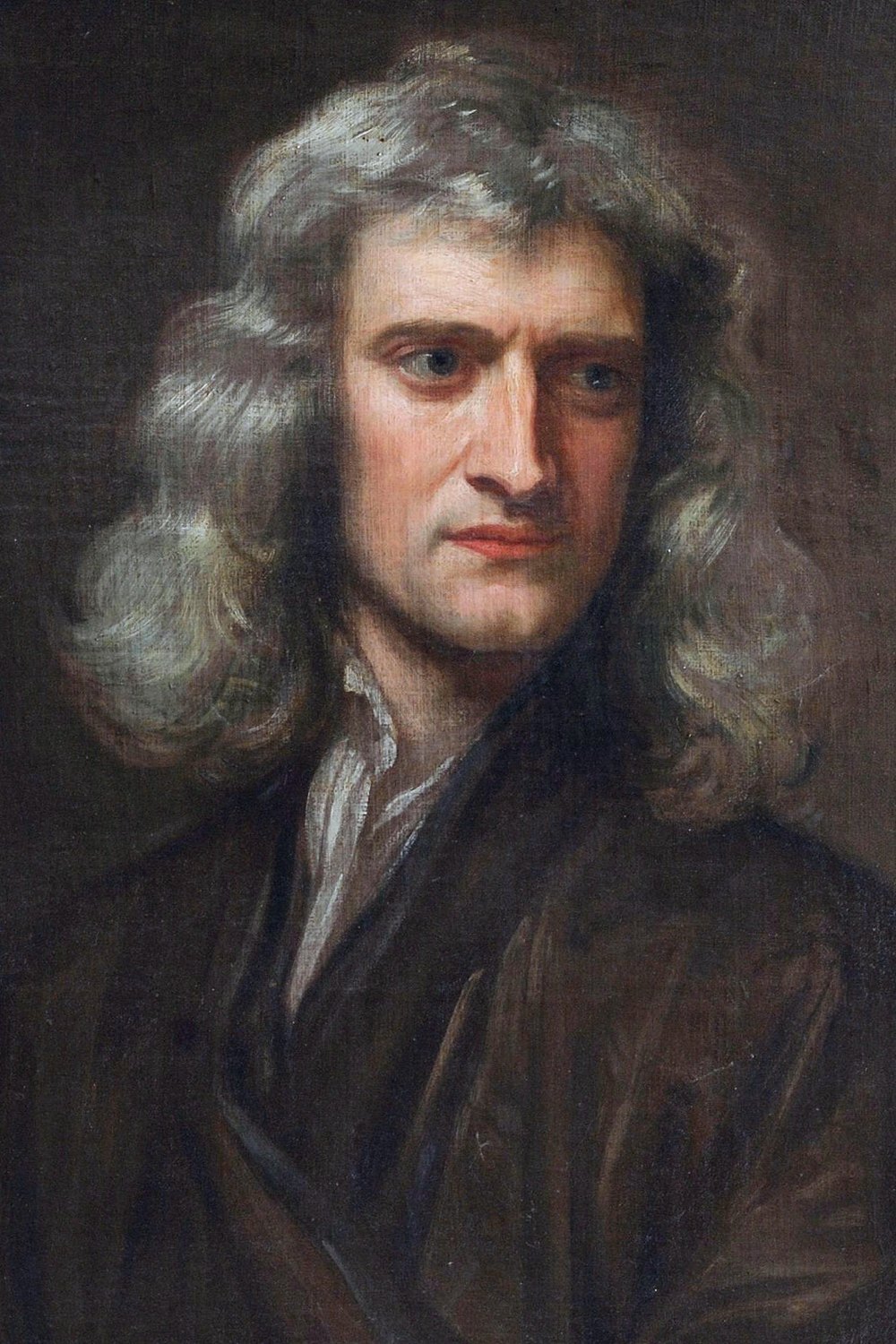
What actually happened
Newton was no naif: he was Master of the Royal Mint, the man who had rebuilt England's coinage. His first trade was rational: take the doubling, walk away. What the bubble then attacked wasn't his intellect but his composure: everyone around him kept getting richer for three more months.
He re-entered with size in the summer; the stock collapsed in the autumn. The famous line was first recorded secondhand thirty-six years later, and the episode captions it as attributed: that he 'could calculate the motions of the heavenly bodies, but not the madness of people.'
Modern reconstructions of his accounts (Odlyzko) confirm the shape: early profit, late re-entry, heavy loss.
The longer arc
The South Sea Company had almost no real trade behind it. Parliament chartered it in 1711 mainly as a vehicle to convert government debt into company shares, granting it a monopoly on trade with Spanish South America that Spain never meaningfully allowed it to use. The company's real business became financial engineering: in 1720 it absorbed a huge share of the national debt in exchange for the right to keep issuing more stock, and rising confidence in the share price, not any cargo or profit, was the entire point.
Parliament's cleanup was blunt. A January 1721 act barred South Sea directors from leaving England or sitting on the boards of the Bank of England or East India Company, and investigators then inventoried and confiscated the directors' personal estates, roughly £2 million, to repay victims. John Blunt, the scheme's chief architect, saw his fortune cut from over £180,000 to £1,000. Newton, who had no part in running the company, kept his post as Master of the Royal Mint until his death in 1727; his scientific reputation survived the bubble far better than his bank account did.
The play to remember
The play.
The bubble doesn't beat your math; it beats your patience.
Watching others get rich is the most expensive spectator sport ever invented.
Was this interesting?
Select an option to vote. You can change it anytime.
Recommended for You
Friday the 13th, 1307
The Knights Templar ran Europe's first international bank: deposit in London, withdraw in Jerusalem by letter of credit. Their biggest debtor was the King of France. On a single Friday morning, he erased the debt by…
The Receipt
In 1519 the crown of the Holy Roman Empire went to auction between kings, and the winning bid came from a commoner. Four years later, with the emperor stalling on the debt, Jacob Fugger sent him what history remembers…
The Match King
By 1929 Ivar Kreuger controlled two-thirds of the world's match production and was lending sovereign nations more money than J.P. Morgan. A meaningful part of the collateral was $100 million of Italian government bonds…
The Locked Library
In the autumn of 1907, with banks failing and no central bank existing, one private citizen reportedly kept the heads of American finance in his library until dawn, until they pledged the money to stop the run. One of…
Tired of Fighting
Jesse Livermore shorted the 1929 crash and, by the widely reported figure, made around $100 million while the country broke. America blamed him for it. Eleven years later he died broke by his own hand, leaving a note…
Account 88888
A 28-year-old trader ran both Barings' Singapore trading desk and the back office that checked it. His hidden error account, 88888, swallowed losses for three years, until the 233-year-old bank that financed the…
No Millionaires at the Reunion
When Cornelius Vanderbilt died in 1877 he was worth more than the US Treasury held. In 1973, one hundred twenty of his descendants gathered for a family reunion, and by the family chronicler's account, not one of them…
The Bridge and the Bricks
In June 1982 the chairman of Italy's largest private bank was found hanging under Blackfriars Bridge in London, bricks and £10,000 in his pockets. Ruled suicide. Twenty years later the forensics were redone, the ruling…
The Kidnap Market
There is a quiet market in London that effectively sets the price of a kidnapped human being, and by the academic account of it, almost all insured hostages come home alive.
New cases drop daily on  TikTok and
  Instagram. One case a day, one model you can retell.