Deception & Evidence
The Money Box
Lustig sold a mahogany box that 'printed' hundred-dollar bills for up to $46,000 a box. The machine worked perfectly for exactly two bills, both real, both loaded by Lustig before the demonstration.
United States, 1920s · Victor Lustig
What actually happened
The Rumanian Box was a delay con: it 'printed' a genuine hundred-dollar bill six hours after cranking, then a second. By the time the buyer discovered the box produced nothing but blank paper, Lustig was days away. The victim had usually planned to counterfeit money themselves, which kept complaints quiet.
Lustig reportedly sold boxes to bankers, a sheriff, and businessmen across the country. The sheriff tracked him down; Lustig talked his way out and paid him off in counterfeit bills.
The longer arc
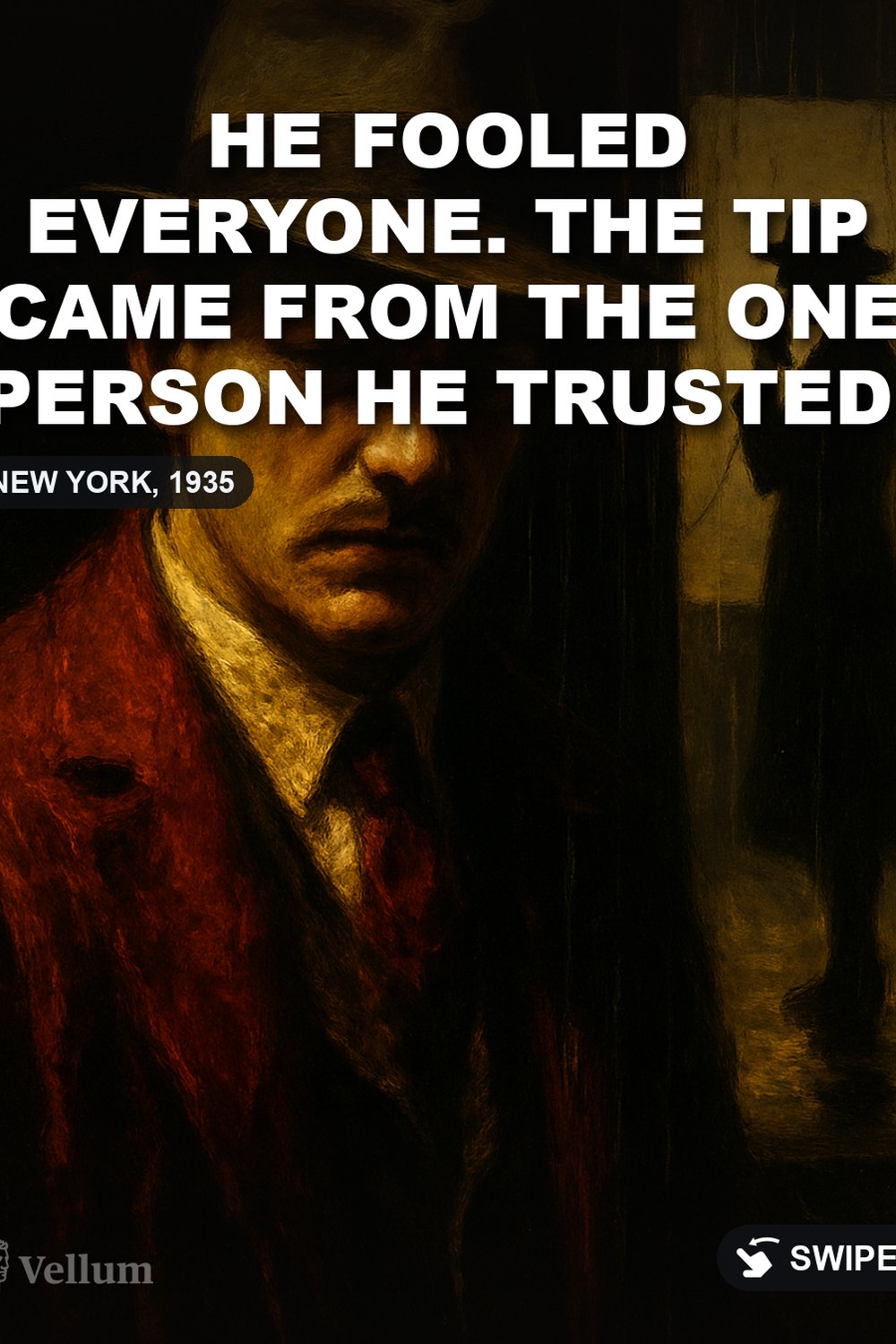
Lustig's American run included a con on Al Capone himself. He asked the mobster to put up $50,000 for a supposed investment scheme, quietly banked the money untouched for two months, then returned every dollar, explaining the deal had fallen through. Capone was so struck by the apparent honesty that he pressed a cash tip on him. It was a small, low-risk move that bought Lustig something more valuable than money: trust from one of the most dangerous men in the country, at the same time he was running money boxes on bankers and lawmen around the region.
The run ended in New York on May 10, 1935, when Secret Service agents arrested him and found $51,000 in counterfeit bills and printing plates in a subway locker. He escaped custody once, sliding down knotted sheets from a jail cell, before being recaptured a month later in Pittsburgh. Sentenced to twenty years, split between the counterfeiting charge and the escape, he was sent to Alcatraz and died in a federal prison hospital in Missouri on March 11, 1947, of pneumonia linked to a brain abscess.
The play to remember
The play.
Sell someone a crime and they can't report the theft.
The strongest lock on a con is the victim's own complicity.
Was this interesting?
Select an option to vote. You can change it anytime.
Recommended for You
The Man Who Sold the Eiffel Tower: Twice
In 1925 Paris couldn't afford to maintain its own monument. Victor Lustig read one newspaper article about it, printed fake government stationery, and sold the Eiffel Tower for scrap to a buyer too embarrassed to report…

The Ledger That Caught Capone
Al Capone ordered murders in daylight and never saw the inside of a courtroom for any of them. What finally convicted him was arithmetic: a seized ledger and the tax owed on money he officially never earned.
The Original Ponzi
In eight months of 1920, Charles Ponzi went from broke clerk to $15 million collected, on a scheme so simple and so doomed that his name replaced the crime. The arbitrage he advertised was real. There just weren't…

The Board That Fired Its Founder
In 1985 Apple's board sided with the professional CEO Steve Jobs had personally recruited, and stripped Jobs of all operating power. Twelve years later the company was ninety days from insolvency. The only option left…
The Quarter Enron Ran Out of Room
Enron's numbers worked for years because the losses lived in entities nobody consolidated and the profits were booked the day a deal was signed. In the autumn of 2001, one analyst finally asked the question that ran out…

The PayPal Decision
Confinity and X.com were burning millions a month trying to destroy each other in the same building on University Avenue. The decision that created PayPal, and the mafia of founders who built Tesla, LinkedIn, YouTube…

The Night FTX Vanished
On November 2, 2022 a leaked balance sheet showed FTX's sister fund was built on FTX's own token. Nine days later the exchange, its $32 billion valuation, and roughly $8 billion of customer money were gone.
The Ransom Room
A room 22 feet by 17, filled with gold as high as a man could reach. That was the price the Inca emperor offered for his life. The Spaniards took delivery of roughly six tons of gold, then convened a trial in a language…
The Blind Doge
An army of crusaders arrived in Venice 34,000 silver marks short of their shipping bill. The city's doge, blind and by the chronicles around ninety, turned their debt into a repossession of his business rivals, and the…
New cases drop daily on  TikTok and
  Instagram. One case a day, one model you can retell.