Deception & Evidence
The Man Who Sold the Eiffel Tower: Twice
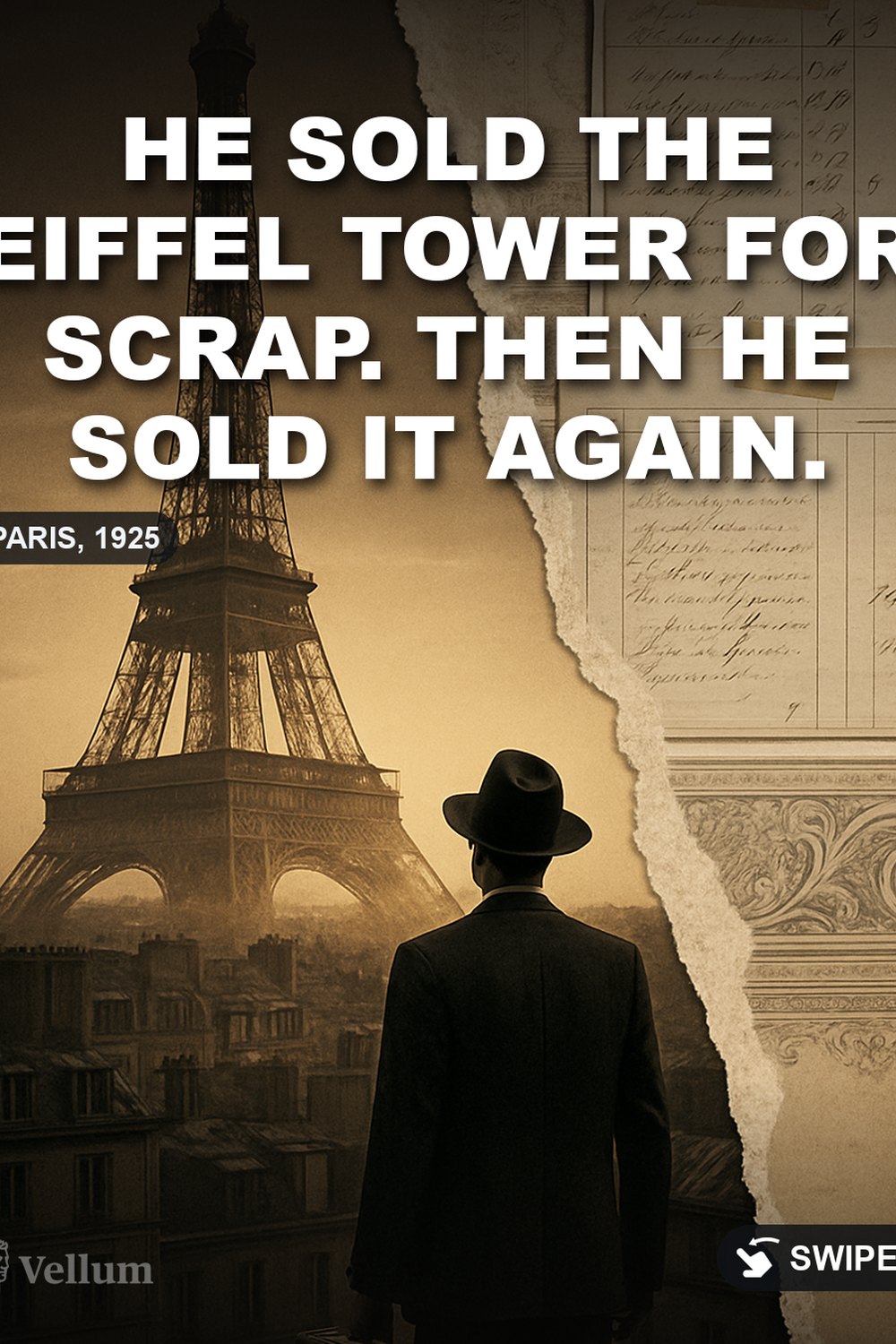
In 1925 Paris couldn't afford to maintain its own monument. Victor Lustig read one newspaper article about it, printed fake government stationery, and sold the Eiffel Tower for scrap to a buyer too embarrassed to report the crime. Then he came back and did it again.
Paris, 1925 · Victor Lustig
What actually happened
Posing as a Deputy Director-General of the Ministry of Posts and Telegraphs, Lustig invited five scrap-metal dealers to a confidential meeting at the Hôtel de Crillon: the tower, he explained, was too expensive to maintain and would be sold for scrap quietly, to avoid public outcry. He read the dealers as carefully as the newspapers: he picked André Poisson, an outsider anxious to break into the Paris establishment, and even extracted a bribe on top of the sale price to make the deal feel authentically governmental.
Poisson was too humiliated to go to the police. Lustig counted on exactly that. The con was engineered so the victim's own reputation guarded the secret. A month later he returned to Paris and ran the identical scheme on a new set of dealers before fleeing to America.
The longer arc
Before Paris, Lustig had already spent more than a decade working the trans-Atlantic liners between France and New York. He posed as a Broadway producer scouting investors for a musical that did not exist, pocketed the seed money, and stepped off the boat before anyone asked to see a script. Along the way he collected aliases the way other men collect stamps, by most counts more than forty, including the invented title "Count Lustig," plus enough forged papers to talk his way out of European police stations that never had quite enough to hold him on.
The story worked because it was rooted in something real. The tower had faced demolition once already. Gustave Eiffel's original permit ran only twenty years, and by 1909 the city was entitled to tear it down. It survived because Eiffel turned it into a radio antenna valuable enough to earn a seventy-year extension in 1910. By the mid-1920s it was an aging, costly structure the government genuinely grumbled about maintaining, which is exactly the plausibility Lustig's fake ministry letter traded on. He left France for the United States soon after the second sale, carrying the same instinct for a believable government cover story into new scams.
The play to remember
The play.
Engineer the victim's silence into the con itself.
When reporting the crime costs the victim their reputation, the fraud polices itself, a pattern that still protects modern investment frauds.
Was this interesting?
Select an option to vote. You can change it anytime.
Recommended for You

The Ledger That Caught Capone
Al Capone ordered murders in daylight and never saw the inside of a courtroom for any of them. What finally convicted him was arithmetic: a seized ledger and the tax owed on money he officially never earned.
The Money Box
Lustig sold a mahogany box that 'printed' hundred-dollar bills for up to $46,000 a box. The machine worked perfectly for exactly two bills, both real, both loaded by Lustig before the demonstration.
The Original Ponzi
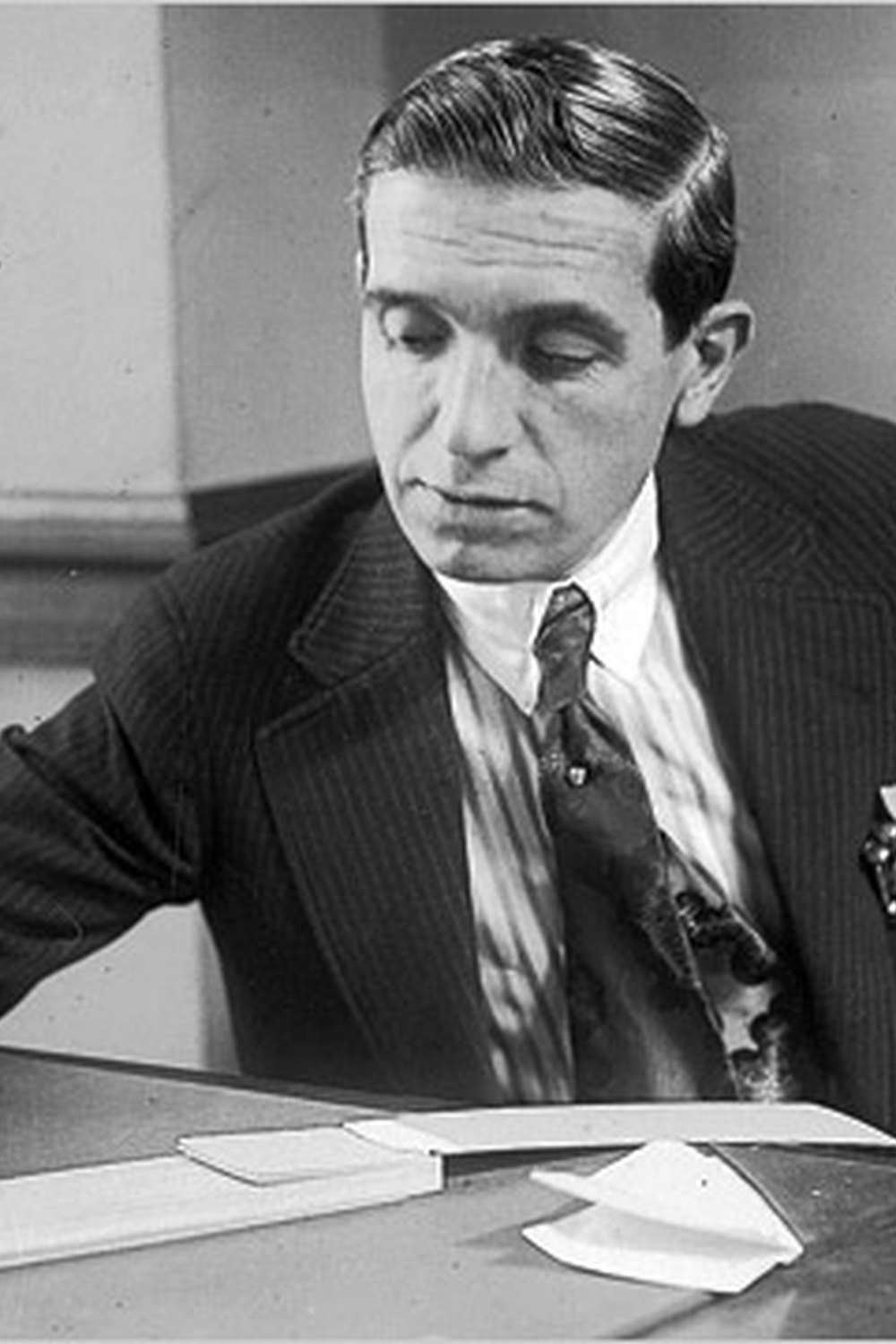
In eight months of 1920, Charles Ponzi went from broke clerk to $15 million collected, on a scheme so simple and so doomed that his name replaced the crime. The arbitrage he advertised was real. There just weren't…

The Board That Fired Its Founder
In 1985 Apple's board sided with the professional CEO Steve Jobs had personally recruited, and stripped Jobs of all operating power. Twelve years later the company was ninety days from insolvency. The only option left…

The Quarter Enron Ran Out of Room
Enron's numbers worked for years because the losses lived in entities nobody consolidated and the profits were booked the day a deal was signed. In the autumn of 2001, one analyst finally asked the question that ran out…

The PayPal Decision
Confinity and X.com were burning millions a month trying to destroy each other in the same building on University Avenue. The decision that created PayPal, and the mafia of founders who built Tesla, LinkedIn, YouTube…
The Night FTX Vanished
On November 2, 2022 a leaked balance sheet showed FTX's sister fund was built on FTX's own token. Nine days later the exchange, its $32 billion valuation, and roughly $8 billion of customer money were gone.
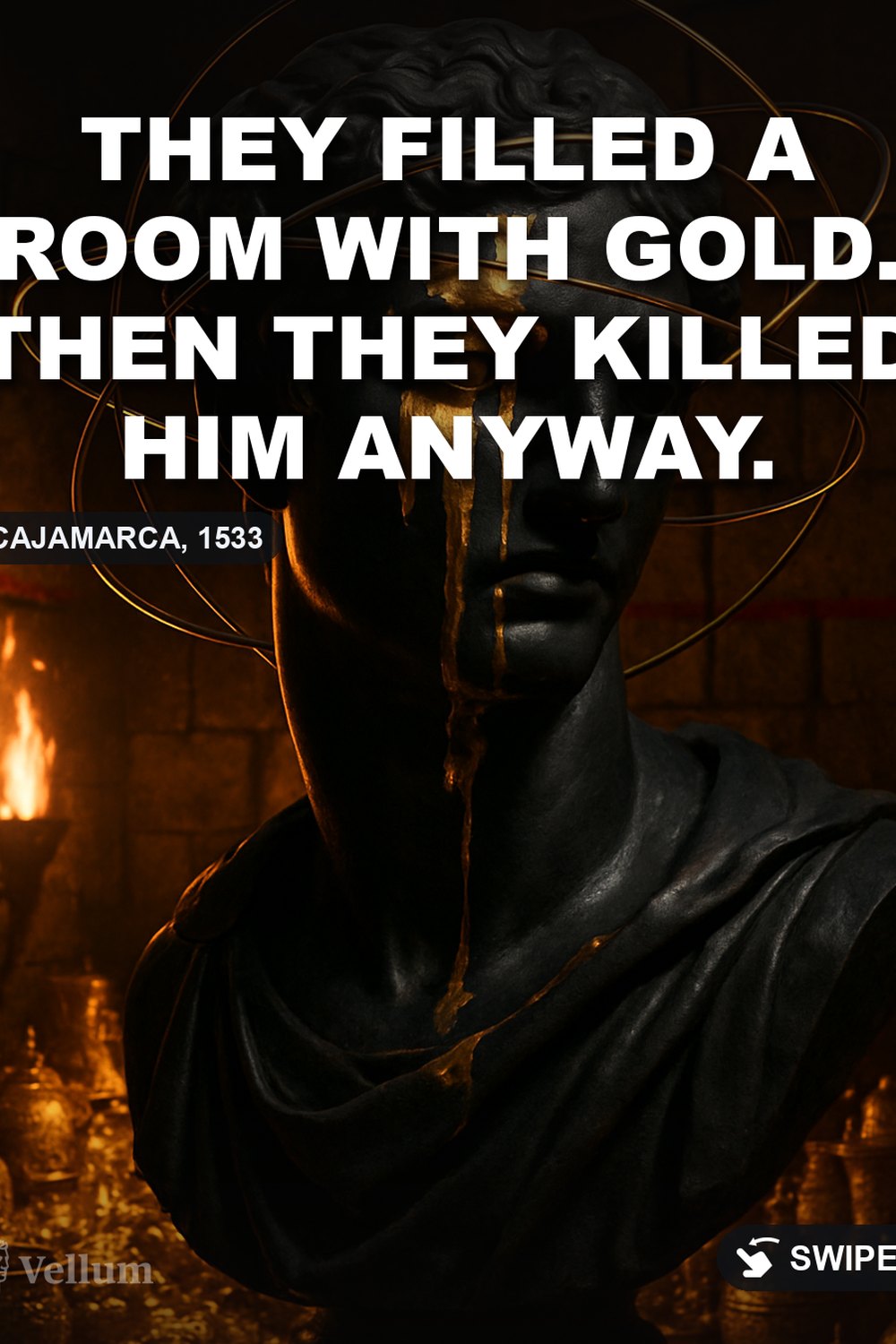
The Ransom Room
A room 22 feet by 17, filled with gold as high as a man could reach. That was the price the Inca emperor offered for his life. The Spaniards took delivery of roughly six tons of gold, then convened a trial in a language…
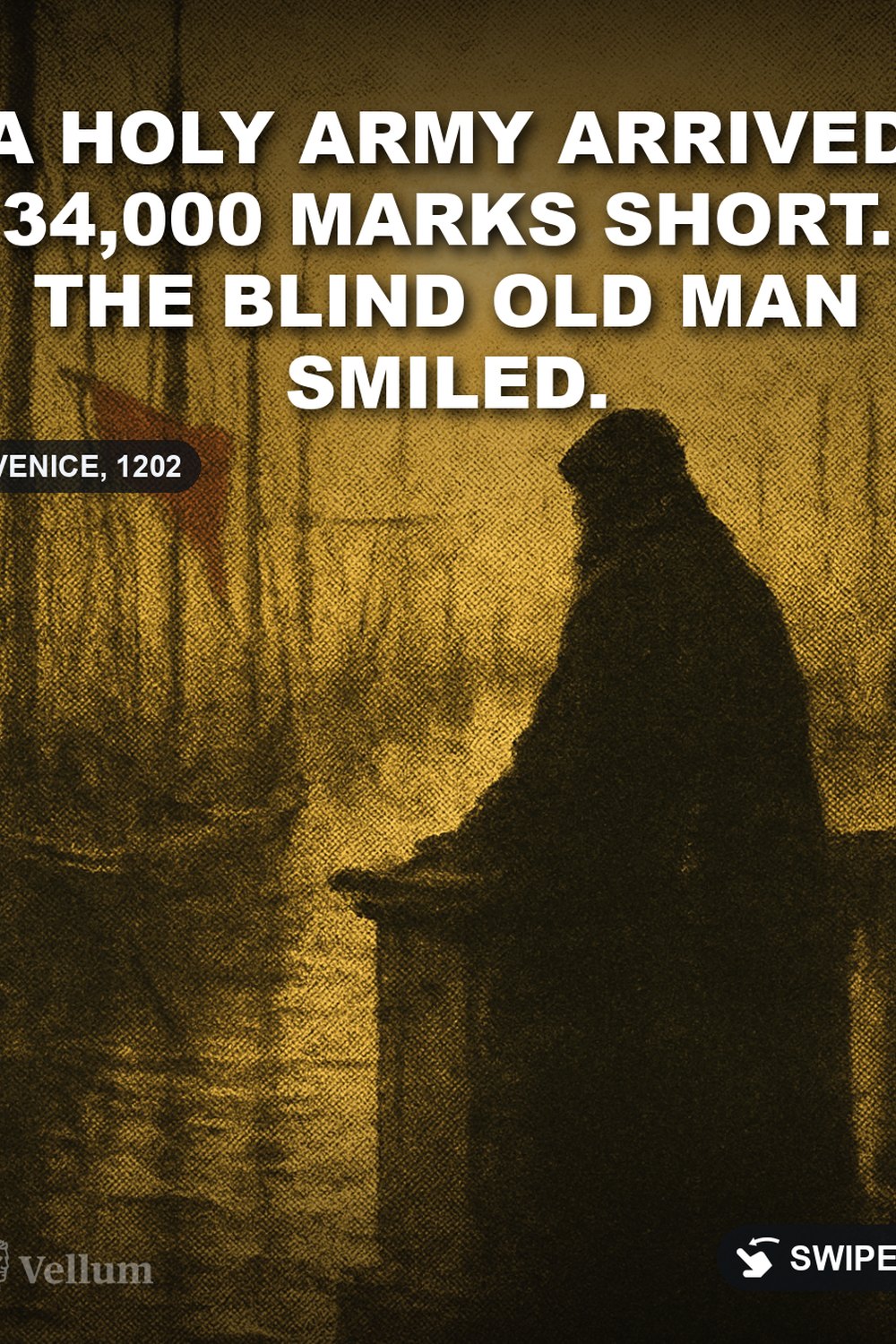
The Blind Doge
An army of crusaders arrived in Venice 34,000 silver marks short of their shipping bill. The city's doge, blind and by the chronicles around ninety, turned their debt into a repossession of his business rivals, and the…
New cases drop daily on  TikTok and
  Instagram. One case a day, one model you can retell.